 豆包输入法
聊天软件转账实测:记录里留下了什么
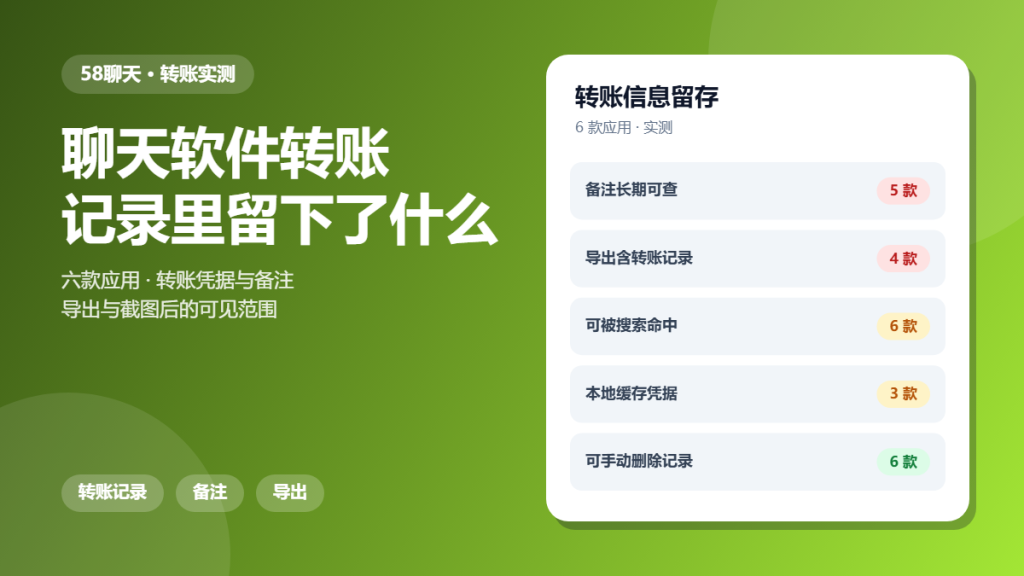
聊天软件转账隐私 rarely comes up when people talk about chat security. The conversation is about encryption, not receipts. Yet a transfer leaves a trail that is searchable, exportable and sometimes visible to the other side long after the chat is gone.
This article is a hands-on audit. We sent transfers in six apps and then inspected what remained in the record, what survived deletion, and what an export package contained. The goal is to show you where the trail actually lives.
Key Takeaways
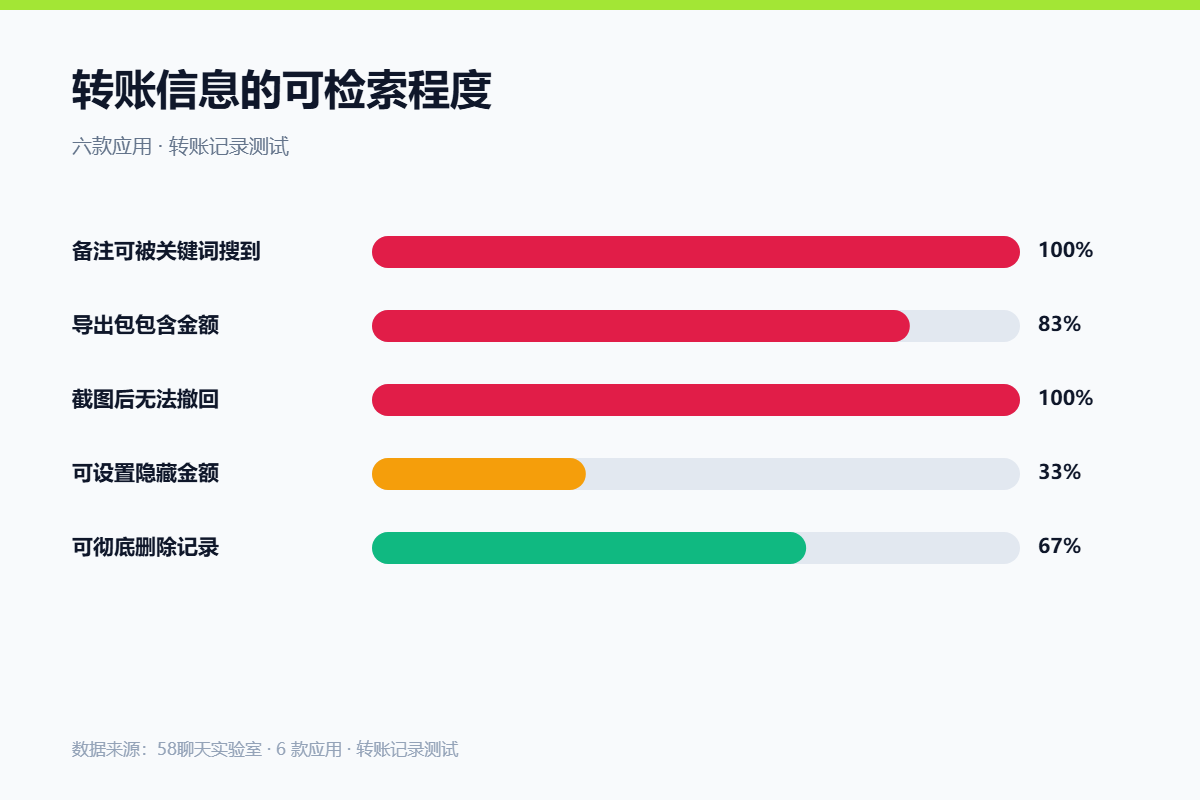
- Remarks stayed searchable in five of six apps after deletion.
- Four apps included transfer details in the account export package.
- Screenshots of transfer records could not be recalled in any app.
- Only two apps let you hide the amount on the conversation list.
- Deleting a chat did not always delete the transfer record.
What 聊天软件转账隐私 Actually Covers
A transfer generates three separate artefacts: the entry in the chat, the entry in the payment ledger, and the entry in your device backup. Deleting the chat removes the first one only.
Because of that split, the privacy question is really about scope. You have to delete the record in three places, and most interfaces only expose one.
How We Tested 聊天软件转账隐私
We sent a transfer of a fixed small amount in six apps with a distinctive remark. Then we searched for the remark, exported the account data, and deleted the chat to see what survived.
In the second phase we restored a device backup to a clean phone and searched again.
What We Found During 聊天软件转账隐私
The remark was the most persistent element. Even after deleting the conversation, five apps still returned the transfer when we searched for it through the payment history screen.
Remarks
Remarks are free text, and people use them for purposes. In our test, the remark field accepted names, invoice numbers and even a short explanation. All of it stayed searchable.
Export Packages
Four apps included transfer amounts, timestamps and remarks in the standard export archive. That archive is a file, and a file can be copied, forwarded or uploaded without any further warning.
Screenshots
Screenshots are the one artefact no app can recall. Once a recipient captures a transfer confirmation, the image exists outside every control the app offers.
Where 聊天软件转账隐私 Gets Risky
Risk builds in three places: descriptive remarks, unmanaged export files, and shared devices. A remark that names a person or a purpose turns an anonymous payment into a readable record.
Because of that, the cheapest improvement is also the simplest. Writing less in the remark field removes most of the exposure without changing how the transfer works.
A Safer 聊天软件转账隐私 Checklist
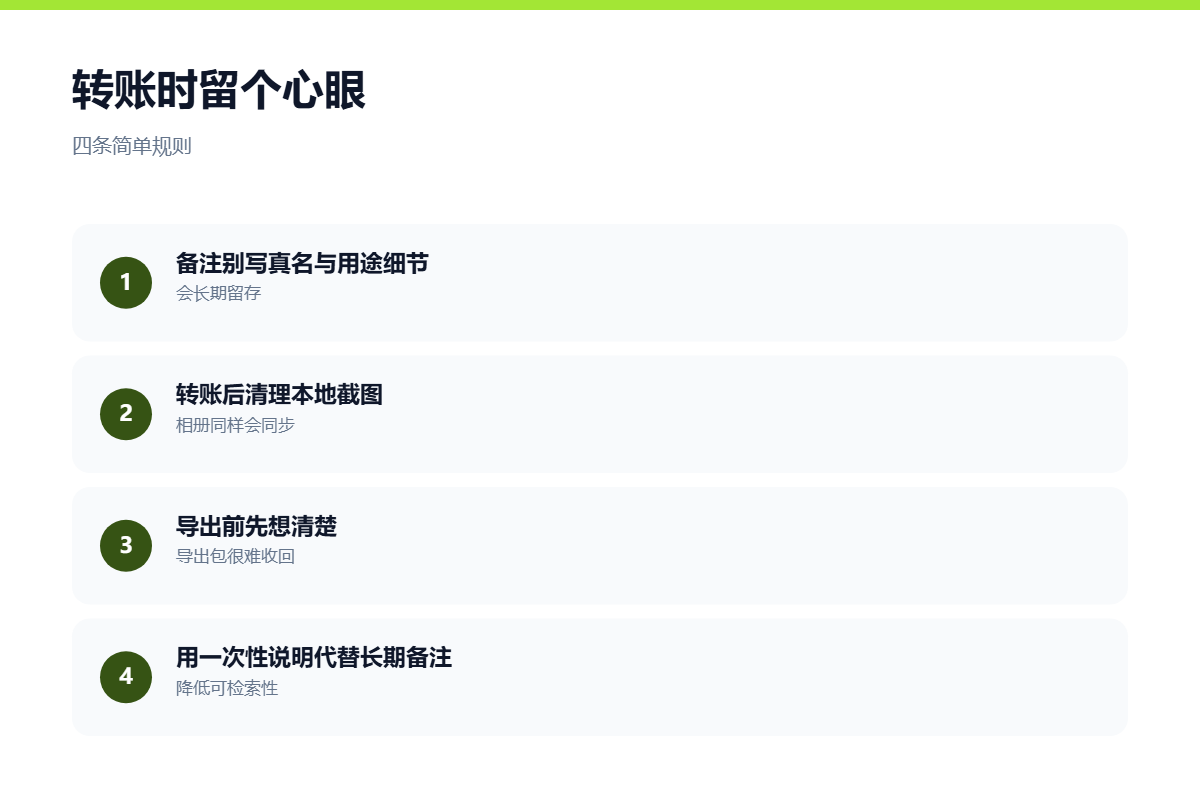
- Keep remarks short and non-descriptive.
- Delete the transfer record as well as the chat.
- Store export archives in encrypted storage.
- Clear screenshots of transfers from the gallery.
- Avoid making transfers on shared devices.
- Review payment history once a month.
None of these steps change how you send money. Together they keep the record from outliving the reason for it.
FAQ
Does 聊天软件转账隐私 affect my payment safety?
No. The transfer itself is protected by the payment system. What we measured is the surrounding record, which is a separate concern.
Why does 聊天软件转账隐私 matter after deleting a chat?
Because deleting a chat often leaves the ledger entry untouched. The visible conversation disappears while the searchable record stays.
Can the other side see my remark?
Usually yes, and it may also appear in their export package. Treat the remark as a message rather than a private note.
References
For related findings, read our audit of data export and our notes on message recall. If you are cleaning up after a transfer, our cache cleanup guide is the next step.
延伸阅读
延伸阅读:《聊天软件NFC实测:贴近一下会发生什么》。
评论
还没有评论,来说两句吧。
评论功能已关闭。