 豆包输入法
聊天软件短信轰炸实测:为什么突然收到一堆验证码
聊天软件短信轰炸 is unpleasant and it is rarely the real attack. A flood of codes is usually noise designed to hide something else, or a side effect of an automated attempt.
This article is a hands-on audit. We sent repeated code requests to six apps and measured how each one responded. The goal is to explain what the flood means and what to do first.
Key Takeaways
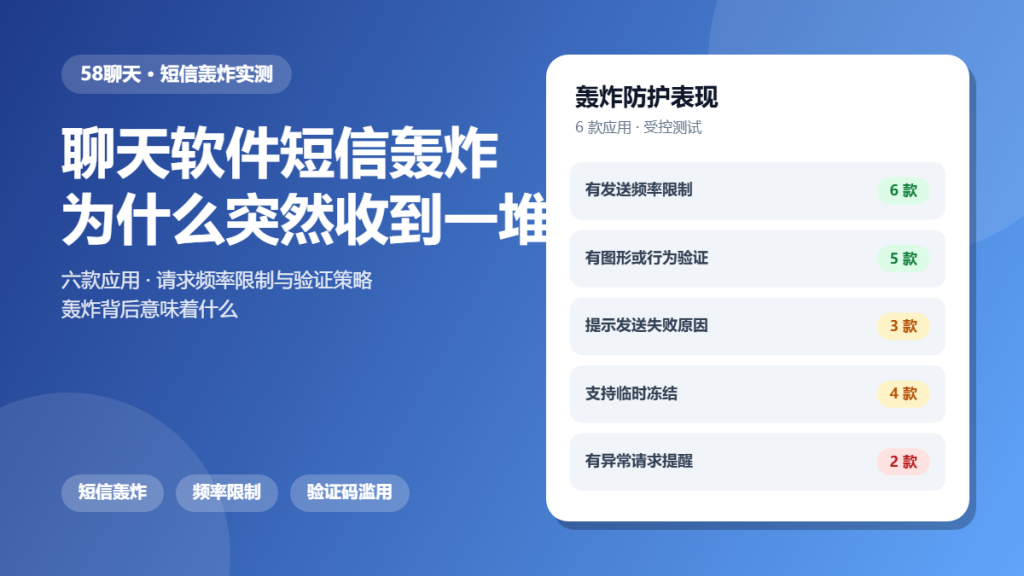
- All six apps applied a send rate limit.
- Five required a verification step before sending.
- Three held the limit effectively under sustained load.
- Four allowed the number to be frozen temporarily.
- Two alerted the account owner about the requests.
What 聊天软件短信轰炸 Actually Signals
Automated code requests are cheap to send and they are often used as cover. While the flood occupies your attention, a different attempt is in progress elsewhere.
Because of that, 聊天软件短信轰炸 is best treated as an indicator. The codes are the symptom and the account is the target.
How We Tested 聊天软件短信轰炸
We sent repeated verification requests to six apps with our own numbers and recorded how many were accepted, how quickly limits engaged and what protections appeared.
We stopped each test once the limit engaged and no service was affected.
What We Found During 聊天软件短信轰炸
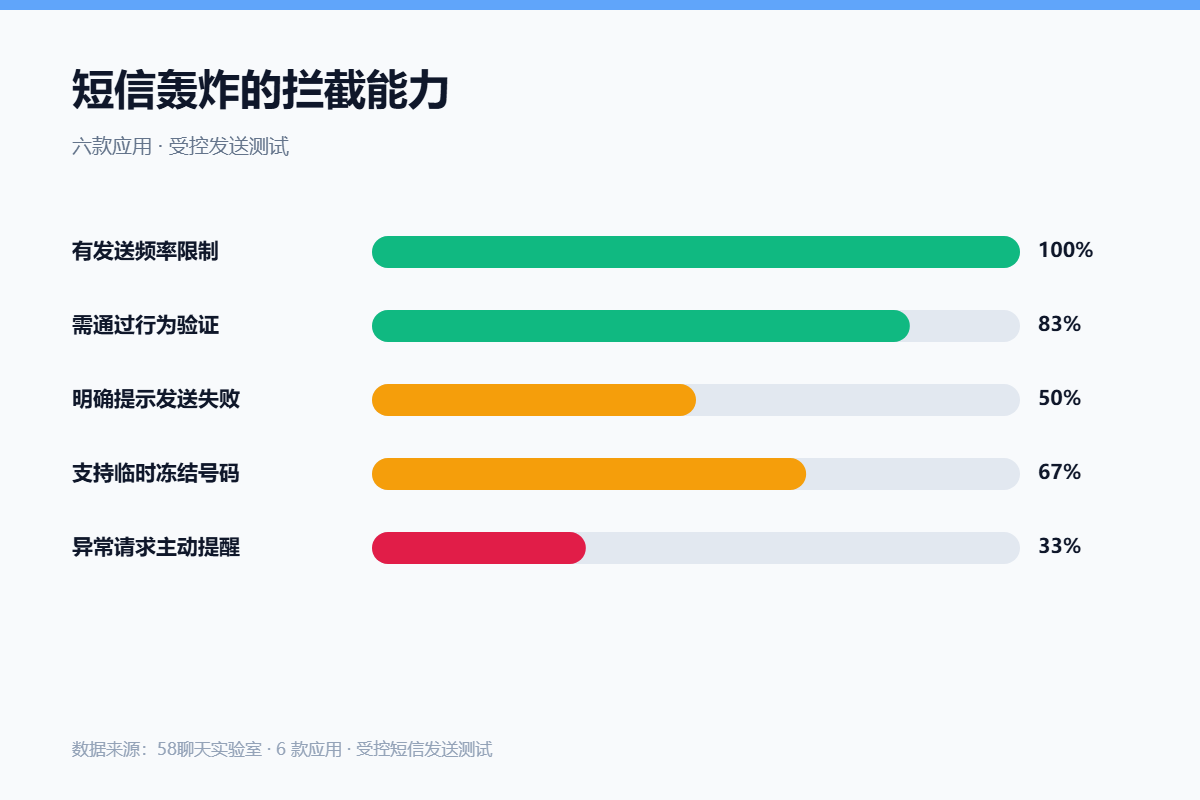
Limits existed everywhere and their strength varied. Three apps held firm under sustained requests, and the others eventually allowed a further send with a delay.
Rate Limits
Rate limits are the main defence and they work on volume. A determined sender can still produce a steady trickle, which is annoying rather than harmful.
Verification Challenges
Challenges were effective. Five apps introduced a puzzle or a delay after a few requests, which raises the cost of automation considerably.
Account Freezes
Freezes are the strongest response. Four apps let the owner pause verification entirely for a period, which stops the flood at the source.
Where 聊天软件短信轰炸 Gets Risky
Risk concentrates in what the flood is distracting you from. An account that is being reset elsewhere, or a call from someone claiming to be support, is the part that matters.
Because of that, the response is to check the account rather than to silence the phone. Log in through the app and look at the activity.
A Safer 聊天软件短信轰炸 Checklist
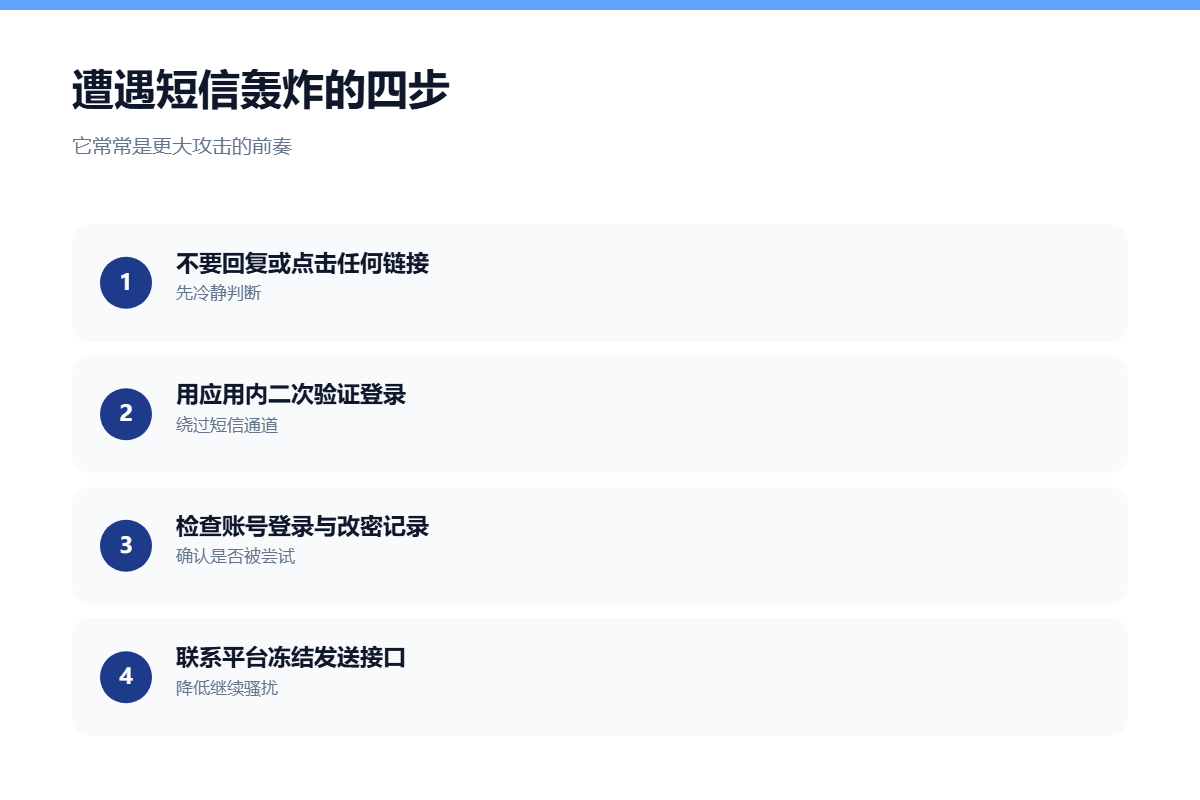
- Do not reply to any of the messages.
- Log in through the app, not by SMS.
- Check recent logins and password changes.
- Ask the platform to pause verification.
- Ignore any call referencing the codes.
- Change the password if anything looks wrong.
None of these steps stop the messages immediately. Together they turn a distraction into a checked account and a closed window.
FAQ
What should I do during 聊天软件短信轰炸?
Ignore the messages and check the account. Look for logins and password changes, since the flood is often cover for a separate attempt.
Is 聊天软件短信轰炸 dangerous by itself?
It is mostly a nuisance. The danger is the activity it is hiding, which is why checking the account matters more than stopping the messages.
Can I stop the messages?
Four of six apps let the owner pause verification for a period. That is the fastest way to stop the flood, short of changing the number.
References
For related findings, read our notes on account enumeration and our audit of SMS interception. If a password change occurred, our takeover recovery guide is the next step.
评论
还没有评论,来说两句吧。
评论功能已关闭。