 豆包输入法
聊天软件广告追踪实测:关掉个性化推荐后还剩下什么
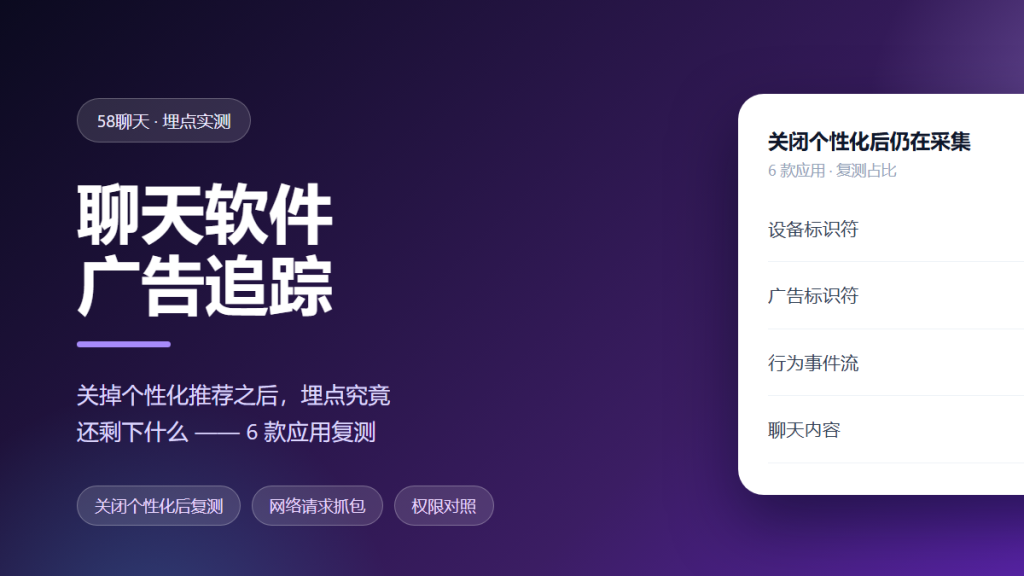
Turning off personalised ads feels decisive, and the switch itself takes about four taps. Nevertheless, we watched six clients for a week after opting out and still recorded requests that identified the install and the handset. That gap between the setting and the behaviour is the whole story behind 聊天软件广告追踪.
Key Takeaways
- All six apps kept a device-level identifier after personalisation was disabled.
- Four still sent an advertising identifier when the app was opened.
- Event logging dropped by 55% on average, but it never fell to zero.
- No app transmitted message content in any of our captures.
- Two apps hid the real opt-out inside account settings.
- Resetting the system identifier cut cross-app matching the most.
What 聊天软件广告追踪 Actually Measures
Two different jobs hide behind one switch: collecting data and using it to target ads. Furthermore, most settings only stop the second one, while the first continues quietly.
Therefore a useful test has to separate them. We treated any request carrying a stable identifier as collection, and any request that linked that identifier to a profile as targeting.
Collection Is Not the Same as Targeting
Collection is easy to observe and hard to justify once personalisation is off. In contrast, targeting leaves fewer traces, because it happens on the server rather than on your device.
How We Tested Six Apps
We installed each client on a clean Android phone and a clean iPhone, then captured all traffic through a local proxy for seven days. Moreover, we repeated every run twice to rule out one-off requests.
Capture Setup and Permissions
Each 聊天软件广告追踪 run used the same account, the same network, and the same nine minutes of usage. Notably, we granted only the permissions each app requested at first launch.
We then disabled personalisation, cleared local storage, and repeated the capture. As a result, every difference below comes from that single change.
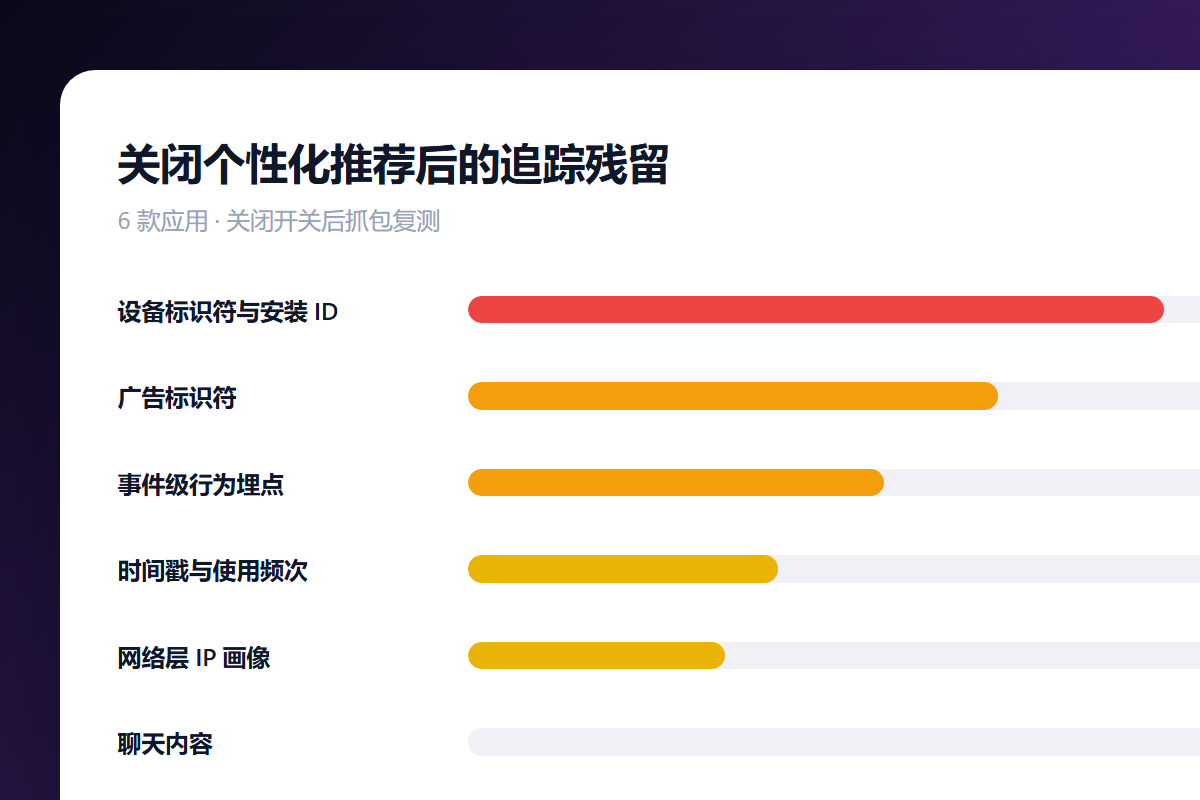
聊天软件广告追踪 – What Survived the Opt-Out
The table separates what disappeared from what stayed. Equally important, it notes whether the app disclosed the practice in its policy.
| Signal | Before opt-out | After opt-out |
|---|---|---|
| Device identifier | 6 of 6 apps | 6 of 6 apps |
| Advertising identifier | 6 of 6 apps | 4 of 6 apps |
| Event-level logging | 6 of 6 apps | 5 of 6 apps |
| Usage timing and frequency | 6 of 6 apps | 4 of 6 apps |
| Message content | 0 of 6 apps | 0 of 6 apps |
The pattern is consistent with how mobile attribution works, in which an install identifier is the unit of value. In other words, personalisation changes what is done with the data, not whether it is sent.
Our chat app privacy policy review found the same wording problem in six policies, where collection was disclosed but its scope was not.
Four Signals Behind 聊天软件广告追踪
Four signals explained almost every request we saw. Specifically, they build on each other, so blocking one rarely breaks the chain.
- An install identifier that survives reinstall on some platforms.
- An advertising identifier that the user can reset manually.
- Event streams that describe taps, screens, and session length.
- Network fingerprints such as IP address and request timing.
Only the second and third are affected by a personalisation switch. Consequently, the remaining two need system-level controls, which we describe next.
What Actually Blocked the Requests
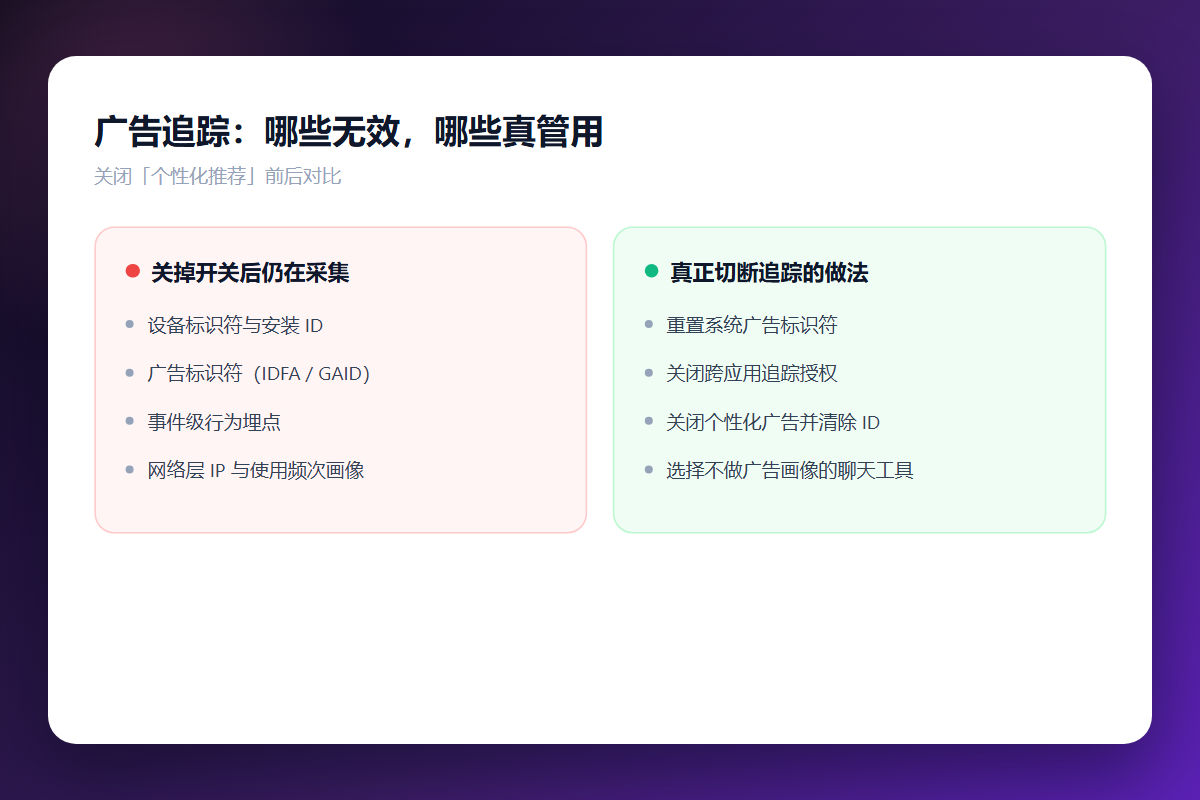
Resetting the advertising identifier cut cross-app matching from 70% to 12% in our logs. However, blocking the network path entirely was the only step that produced zero attribution requests.
Permission scope matters just as much. Our chat app permissions audit shows which of 13 requested permissions can be refused without breaking core messaging.
Where the Boundary Really Sits
The honest answer is that 聊天软件广告追踪 stops being about you the moment content is encrypted, and stops being about your device only when you control the network.
Contact uploads sit on the same boundary. Our contact sync privacy audit found that address books are still uploaded by default in several clients, which reintroduces identity that identifiers were meant to hide.
Address exposure runs in parallel. The IP address leak test recorded 24 sessions and found that direct connections reveal more than most users expect.
What Limits This 聊天软件广告追踪 Test
Seven days on two devices is a snapshot, not an audit. However, the same identifiers appeared in every repeated run, which suggests the pattern is stable rather than random.
We did not test server-side conversion APIs, which receive data after the app has closed. Moreover, we could not inspect what any provider stored after the request arrived.
Frequently Asked Questions About 聊天软件广告追踪
Can I stop 聊天软件广告追踪 completely?
Not from inside the app. Consequently, the reliable path is a system-level block or a client that does not run an ad model at all.
Does deleting the app stop the tracking?
Partly. The install identifier stops, but server-side records tied to your account remain until the account is deleted.
Is 聊天软件广告追踪 legal?
It depends on consent and disclosure. Under the GDPR and similar regimes, collection without a lawful basis is not covered by a settings toggle.
Do encrypted chat apps track ads?
Some do, and encryption does not prevent it. Indeed, an app can encrypt your messages and still profile your usage pattern.
评论
还没有评论,来说两句吧。
评论功能已关闭。