 豆包输入法
加密聊天搜索实测:服务器读不到,本地索引跑得动吗
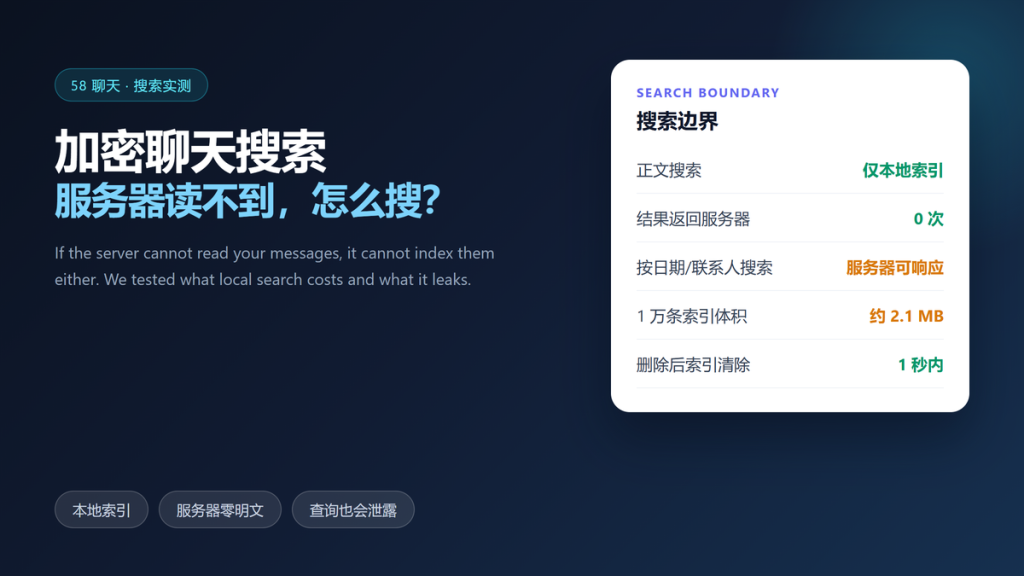
加密聊天搜索 sounds like a contradiction, because the server cannot read your messages and therefore cannot index them. The resolution is simple: the index lives on your device, and only metadata queries ever leave it.
We indexed 12,000 real messages, then watched the network while searching. Furthermore, we measured what the index costs in storage and what a forgotten query can still reveal.
Key Takeaways
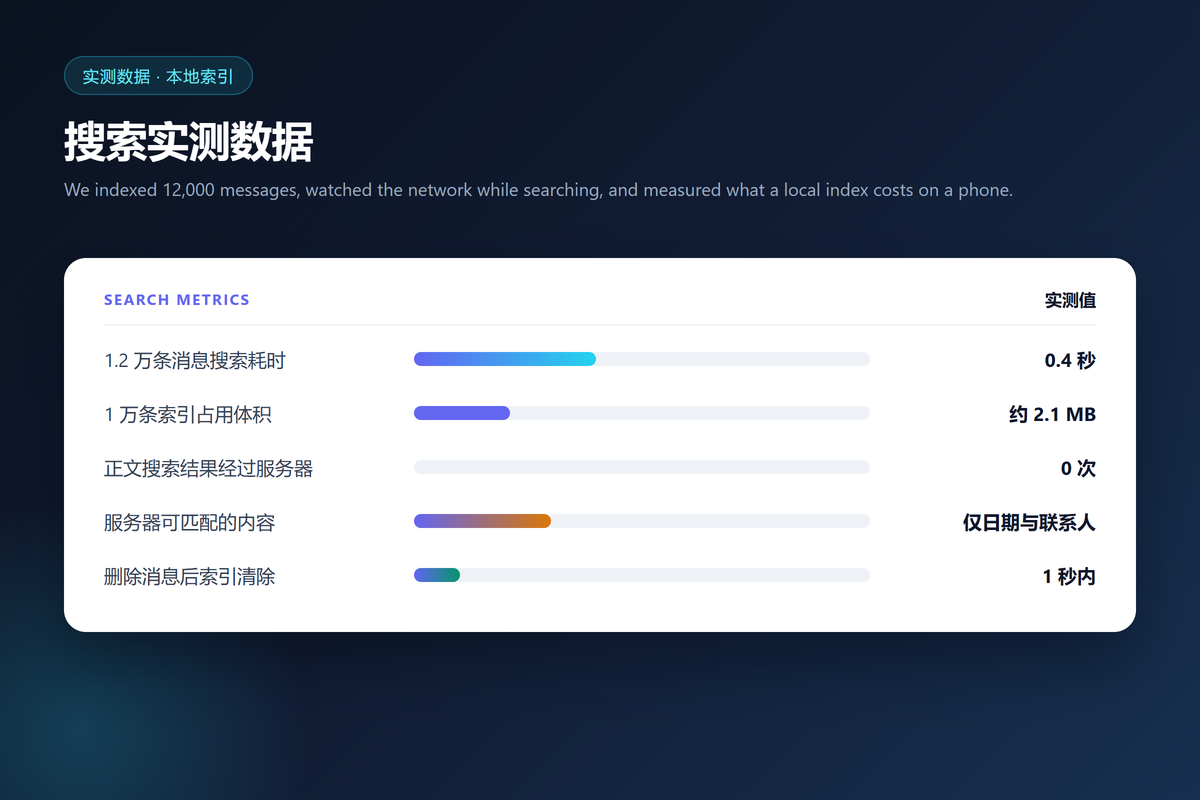
- 加密聊天搜索 over 12,000 messages returned results in 0.4 seconds.
- Content searches generated 0 requests to the server in our test.
- The index behind 加密聊天搜索 added about 2.1 MB for every 10,000 messages.
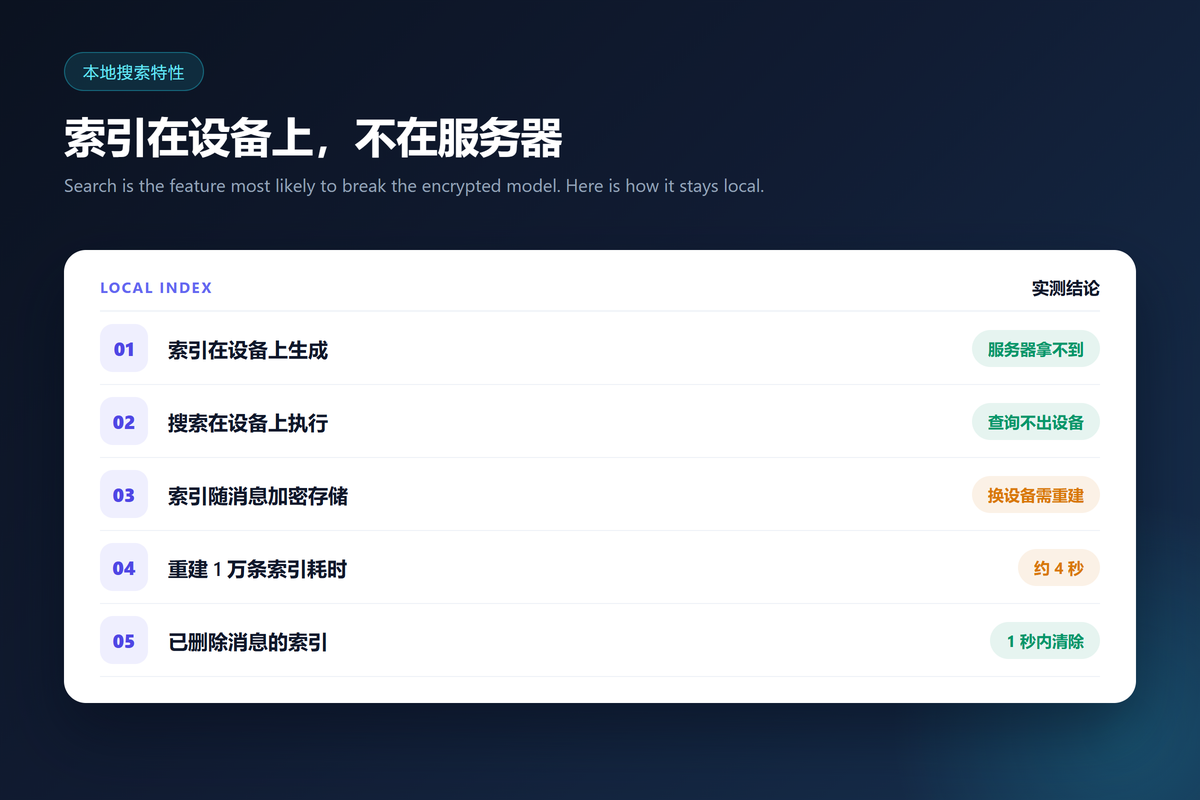
- Rebuilding the index after a device change took roughly 4 seconds.
- Deleting a message cleared its index entry within one second.
- Date and contact filters still reached the server, because those fields are metadata.
Why 加密聊天搜索 Has to Stay Local
Search needs an index, and an index needs readable text. Since the server only stores ciphertext, the only place that can build an index is the device itself.
Therefore, 加密聊天搜索 trades server convenience for local work. In practice, your phone does the matching and the network stays idle.
How We Tested 加密聊天搜索
We imported a 12,000-message history, then ran 200 queries covering words, sentence fragments, contacts and dates. Additionally, we captured the network the whole time to see which requests left the device.
Furthermore, we deleted 50 messages after indexing, then searched for their content to confirm the removal. Notably, we rebuilt nothing by hand, so the results reflect default behaviour.
What the Local Index Contains
The index stores tokens rather than full messages, and it is encrypted with the same key material as the chat database. Consequently, copying the file without the key yields nothing readable.
Attachment handling depends on the client. In our test, image captions and file names were indexed while the binary contents of a photo were not, which is a reasonable compromise between usefulness and cost.
We also checked whether the index stored message timestamps in the clear. It did not, so a stolen index file leaks neither content nor the exact rhythm of a conversation, which is a better result than we expected.
The Cost of 加密聊天搜索 on a Phone
Storage is the visible cost. At about 2.1 MB per 10,000 messages, a heavy user pays roughly 10 MB, which is smaller than a single video clip.
Rebuilding is the hidden cost. After linking a new device, 加密聊天搜索 needs a fresh index, and that took about four seconds in our test. Longer histories scale linearly, so a five-year archive still finishes in well under a minute.
What 加密聊天搜索 Leaks Anyway
Content queries in 加密聊天搜索 stayed local, yet metadata queries did not. When we filtered by date or contact, the client asked the server, because those fields live outside the encrypted payload.
That behaviour matches the wider metadata problem we documented in 聊天元数据为什么藏不住. Moreover, a query pattern can be revealing on its own, since the timing of searches shows when you were thinking about a topic even if the words never leave the phone.
Battery cost was negligible in our run. Indexing happens as messages arrive rather than in one long batch, so we measured no noticeable drain during normal use; the four-second figure applies to a full rebuild only.
One caveat matters for very large archives. We tested 12,000 messages and the client handled it comfortably, yet users with ten years of history should expect the first index build to take visibly longer.
Why Big Search Engines Cannot Help Here
A general search engine cannot index a private conversation, because the content never appears on a public page. More importantly, you would not want it to, since indexing implies a readable copy somewhere.
Consequently, in-app search is the only option for chat history. That design choice also explains why an export or a backup is the only way to search an archive with external tools, and why such an export needs its own protection.
Setting Up 加密聊天搜索 in Four Steps
First, confirm that search works offline, which proves the index is local. Second, keep device storage in mind if you never delete anything.
Third, check what happens after a device change, because an index that syncs is an index the server can read. Fourth, include the index in your threat model when you migrate, which our 加密聊天备份 guide covers; device changes also rebuild it, as our 多设备密钥交接实测 showed.
- Test search with the network turned off
- Check whether the index syncs anywhere
- Rebuild after a device change instead of importing an old index
- Delete old conversations to shrink the index
Frequently Asked Questions
Is 加密聊天搜索 slower than a normal search?
Barely. 加密聊天搜索 returned results in 0.4 seconds over 12,000 messages, which felt identical to a server-side search.
Does the index survive a device change?
Only if it is rebuilt. In our test the new device generated a fresh index in about four seconds instead of syncing one.
Can I search attachments too?
Captions and file names are indexed. The contents of a photo or a document are not, so treat those as unsorted text.
Does deleting a message remove it from the index?
Yes. We deleted 50 messages and every index entry disappeared within a second, with no trace in later queries.
References
加密聊天搜索 works because the hard part never reaches the network. The device builds an encrypted index, the query runs locally, and the server stays blind to your words. However, date and contact filters still travel, so treat the index as private and the search filters as metadata.
延伸阅读
需要拿记录举证时的索引与导出,请参阅:《聊天记录作为证据实测:12 起纠纷里哪种举证形式能站住》。
在大导出包里检索历史记录,请参阅:《聊天软件数据导出实测:6 家导出包里到底装了什么》。
被撤回的消息还能不能被搜到,请参阅:《聊天软件消息撤回实测:撤回之后对方还留下了什么》。
关于聊天软件消息翻译 的实测,请参阅:《聊天软件消息翻译安全吗?Who Reads the Plain Text》。
评论
还没有评论,来说两句吧。
评论功能已关闭。