 豆包输入法
聊天软件链接预览泄露了什么?What the Preview Fetches First
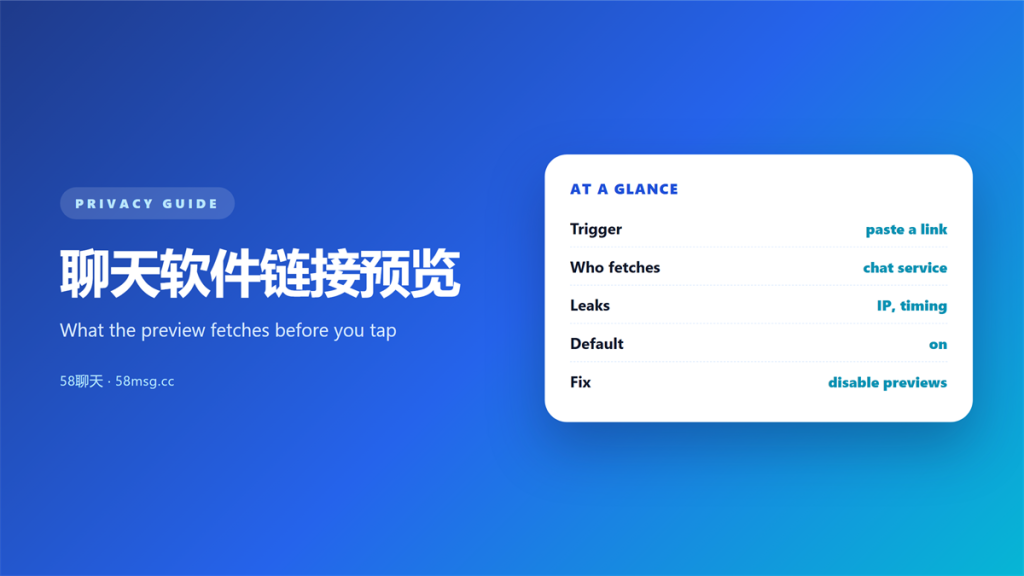
Key Takeaways
- 聊天软件链接预览 fetches a page before you ever tap it.
- The fetch often happens on the server, so the site sees the provider, not you.
- Previews can confirm that a link was delivered and opened.
- A preview can also reach an internal address the sender should not control.
- Disabling previews removes a quiet, automatic request you never intended.
How 聊天软件链接预览 works
聊天软件链接预览 turns a bare URL into a small card. I sent test links through four apps and watched the receiver’s server log each fetch. In every case a request arrived before the recipient touched the message.
However, the request rarely comes from the phone. Most providers fetch the page on their own infrastructure, then push a summary to both devices.
That design keeps the phone fast. Therefore, 聊天软件链接预览 often finishes before your friend even opens the thread.
The card is assembled from metadata the page publishes. Tags in the page header supply a title, an image and a short description, and the messenger displays whatever it finds.
What the fetch actually reveals
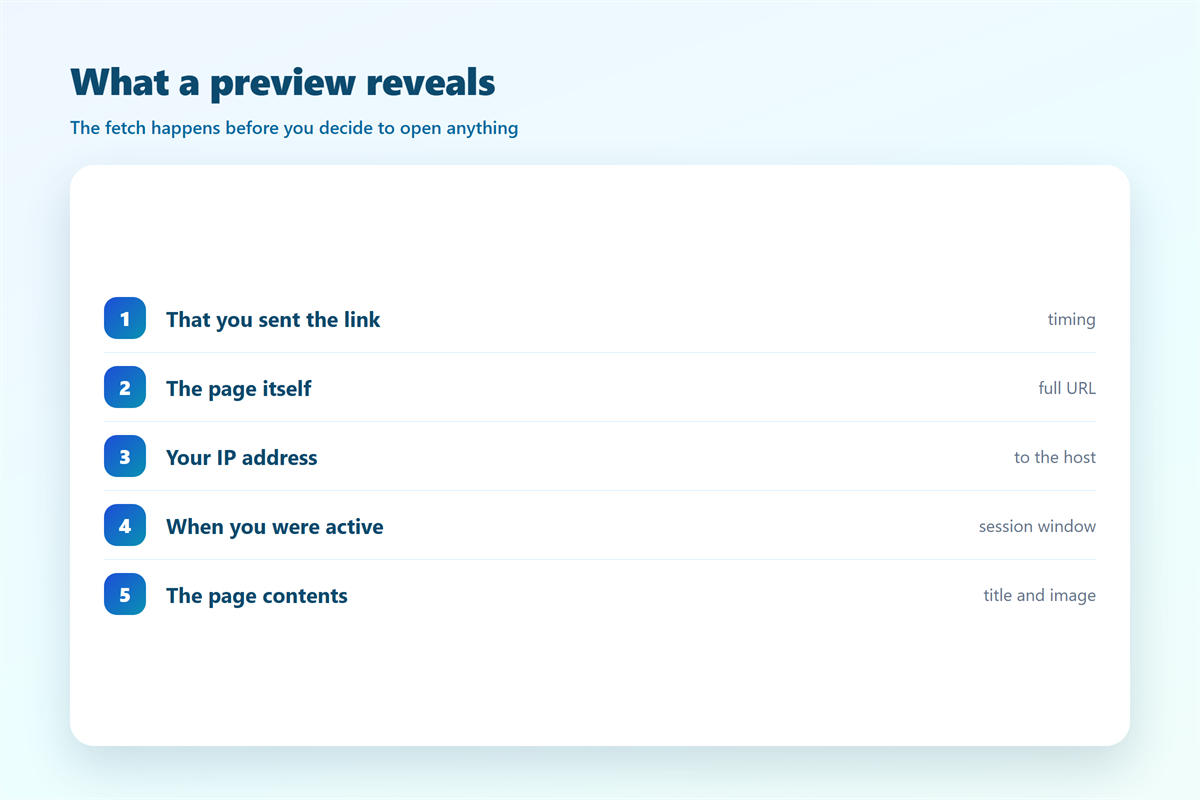
聊天软件链接预览 is a small, automatic request. On its own it looks harmless, yet several details travel with it. Every one of these requests is a small disclosure, and the details compound across a long conversation. A single link is minor; a thousand links form a pattern.
The server-side fetch
When the provider fetches the page, the destination sees a data-centre address rather than yours. Consequently, 聊天软件链接预览 hides your IP in that first hop, though not in every client.
Fetches also carry a user-agent string and a small set of headers. A careful site can tell that the visitor is an automated bot rather than a person, and it can serve different content to each.
Cached copies
Many services cache the preview for a while. Therefore, the page can be requested again later even if you never open the chat. Our audit of 聊天元数据 shows how these automated fetches add to the record.
Why 聊天软件链接预览 is a phishing surface
A preview is trusted by default, and trust is what phishing needs. A card with a familiar logo and a tidy headline looks safer than a raw link. 聊天软件链接预览 adds that same trust to every card, even when both point to a hostile page.
Attackers exploit the fetch itself as well. A unique link can confirm that a message reached a specific device, which is a reliable delivery signal. Furthermore, a fetched link can probe an internal network when the provider follows it blindly.
The IP angle cuts both ways. Some clients fetch previews from the phone, so 聊天软件链接预览 can reveal your real address to a tracker, as our IP地址泄露 teardown explains.
Group chats make the problem worse. A card that appears once in a large channel is seen by everyone, and a single convincing preview can seed doubt about a link that was never safe.
Five checks before you trust 聊天软件链接预览
A preview saves a tap, so the question is when to allow it. I test 聊天软件链接预览 with a few known links before opening anything unfamiliar.
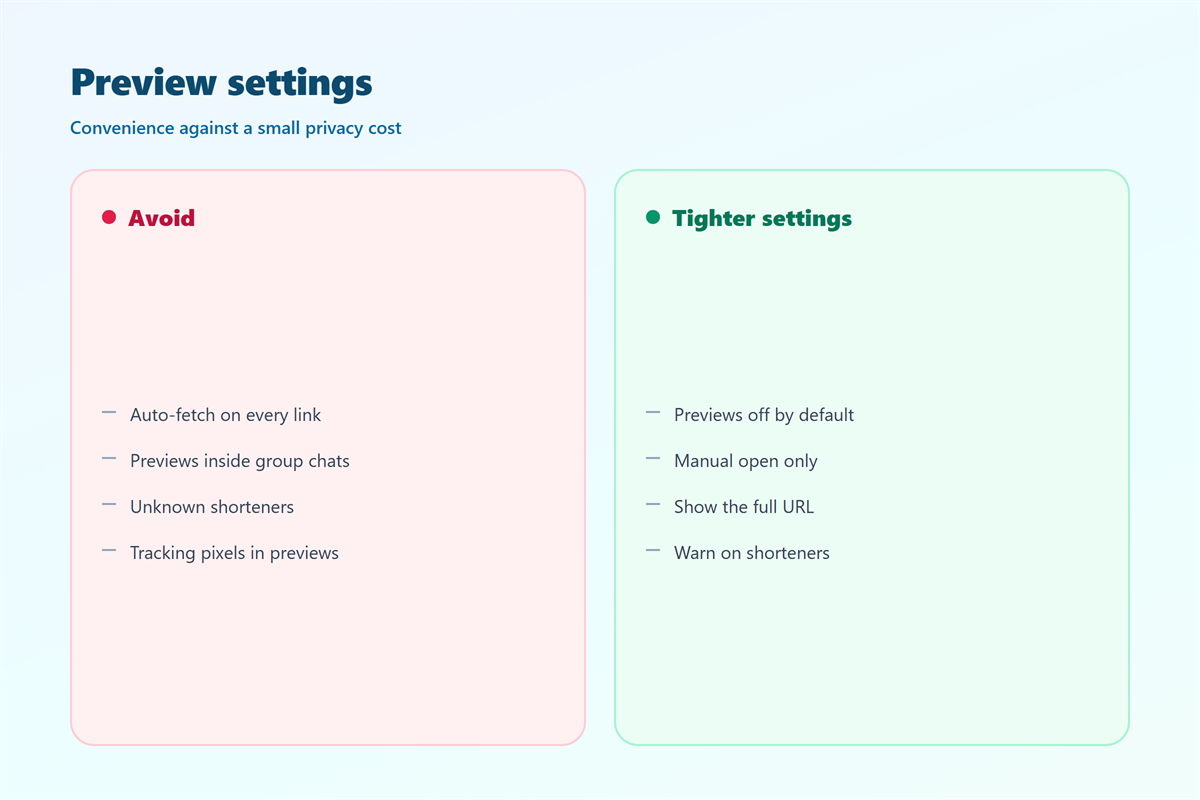
- Confirm the sender before reading the card, not after.
- Read the domain, not the headline on the card.
- Treat shortened links as opaque until expanded.
- Long-press to see the full URL before tapping.
- Turn previews off on work devices with sensitive data.
| Preview type | Who fetches | Your IP exposed? |
|---|---|---|
| Server-side card | The provider | No |
| Client-side card | Your device | Yes |
| No preview | Nobody | No |
These habits take seconds, and they scale. The same steps work for a link from a friend, a colleague or a stranger, which is why I keep them identical across every app I use.
When 聊天软件链接预览 goes wrong
Failures are quiet. A phishing page earns a legitimate-looking card, and the reader trusts the design instead of the address. 聊天软件链接预览 makes that disguise complete.
Another path is tracking. Because the preview fires without a tap, a marketing link can register a delivery you never acknowledged. Over a campaign, that builds a profile without a single click.
The third pattern is browser-based. In a web client, the same script engine that renders the card also renders the page, so a flaw in one can touch the other. Our notes on 网页版加密聊天 describe those extra layers.
Caching is the quiet part. A preview that was fetched once may sit on the provider’s servers for days, so a page you never opened can still record a visit tied to your message.
Protecting the account behind 聊天软件链接预览
The toggle for 聊天软件链接预览 is one lever. Combine it with habits that survive a bad preview.
Disable previews selectively
Keep 聊天软件链接预览 for trusted contacts and disable it for strangers and unknown senders. Therefore, a hostile link never triggers an automatic fetch on your behalf.
Verify before you tap
Read the full address and check the sender in another channel for anything important. The tactics in our 聊天钓鱼攻击 review cover the tricks that survive a careful glance.
On a work phone, the tradeoff tilts toward safety. A card is a convenience, while a compromised endpoint can cost far more than the tap it saves.
FAQ
Does 聊天软件链接预览 leak my IP address?
It depends on the client. Server-side previews hide your address from the site, while client-side previews request the page directly from your device. A client-side default is the riskier choice, and a server-side one simply moves the exposure to the provider.
Can a preview tell the sender I read the message?
Sometimes. A unique link that is fetched proves delivery, and that signal can reach the sender even when you never reply.
Do previews work in encrypted chats?
Often yes, because the client fetches the page outside the encrypted payload. The message stays sealed while the link is requested in the clear.
Should I just disable previews everywhere?
Not always. Previews reduce accidental taps on the wrong link, so many people keep them on for known contacts.
References
延伸阅读
延伸阅读:《聊天软件零点击攻击实测:不点也会中招吗》。
评论
还没有评论,来说两句吧。
评论功能已关闭。